
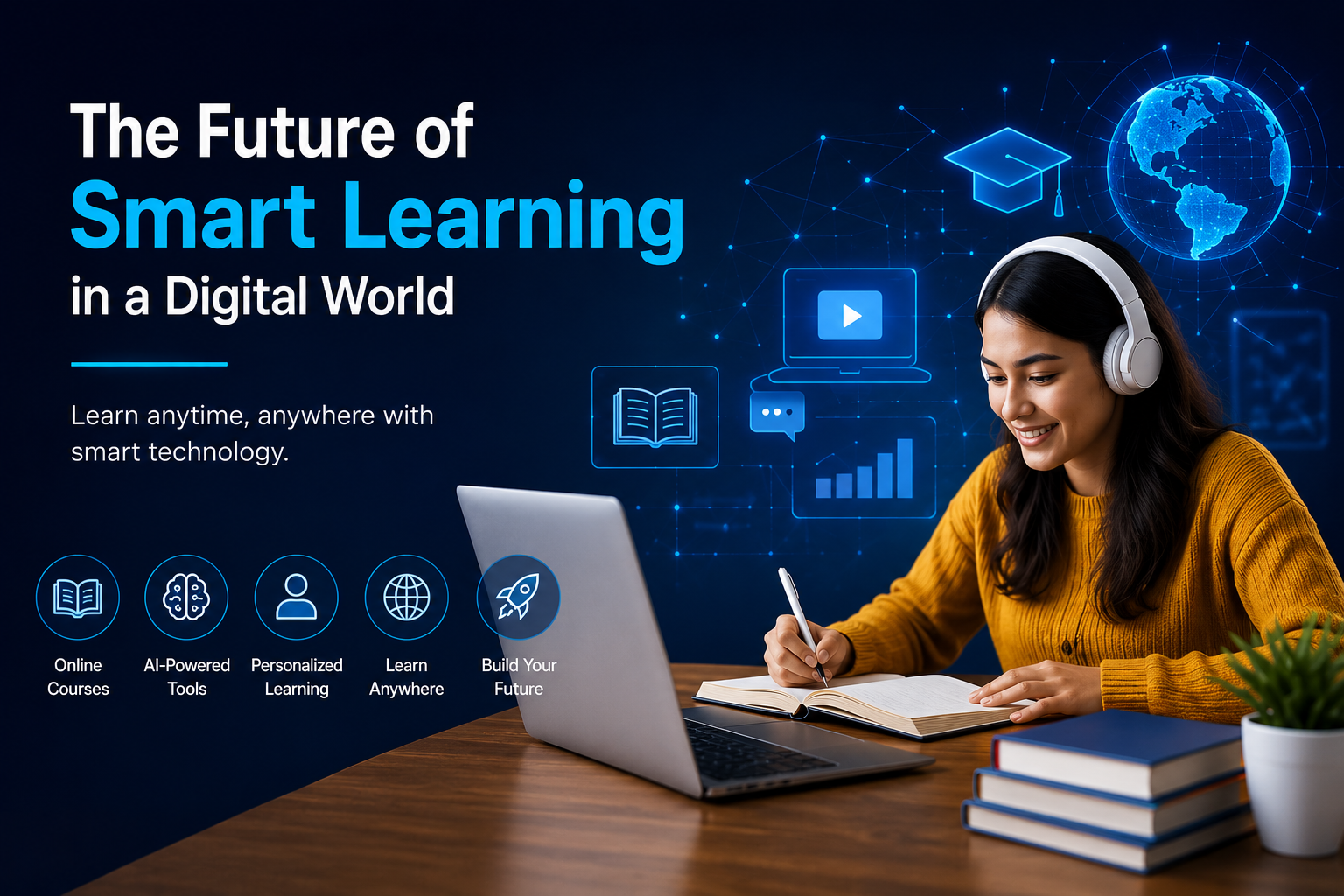
In today’s fast-changing digital era, learning is no longer limited to classrooms and textbooks. Technology has completely transformed the way people gain knowledge, build skills, and stay updated with modern trends. Smart learning has emerged as one of the biggest innovations in education, making learning more interactive, flexible, and accessible for everyone.
From online courses to AI-powered study tools, the future of education is becoming smarter every day. People can now learn anytime, anywhere, using smartphones, tablets, and laptops. This digital transformation is helping students, professionals, and entrepreneurs improve their skills without traditional limitations.
What Is Smart Learning?
Smart learning refers to the use of technology and digital tools to improve the learning experience. It combines innovation, interactive platforms, and personalized education methods to make learning easier and more effective.
Some examples of smart learning include:
- Online learning platforms
- AI-powered educational tools
- Virtual classrooms
- Mobile learning apps
- Interactive video tutorials
- Digital study resources
These technologies are helping people learn at their own pace while improving understanding and engagement.
Benefits of Smart Learning
1. Flexible Learning Experience
One of the biggest advantages of smart learning is flexibility. Learners can access educational content anytime and from anywhere. This allows people to balance learning with work, business, or personal responsibilities.
2. Personalized Education
Modern learning platforms use artificial intelligence to understand a learner’s progress and recommend customized lessons. This personalized approach helps students focus on areas where they need improvement.
3. Interactive and Engaging
Traditional learning methods can sometimes feel boring or repetitive. Smart learning introduces interactive videos, quizzes, animations, and virtual experiences that keep learners engaged.
4. Cost-Effective Learning
Many online resources are affordable or even free. This makes education accessible to people from different backgrounds without expensive tuition fees.
5. Faster Skill Development
Digital learning platforms provide instant access to updated information, helping learners gain new skills quickly and stay competitive in modern industries.
The Role of AI in Education
Artificial intelligence is becoming a major part of smart learning. AI-powered systems can:
- Track student performance
- Suggest learning materials
- Provide instant feedback
- Create personalized study plans
- Improve learning efficiency
AI tools are helping students learn smarter instead of harder.
How Businesses Benefit from Smart Learning
Companies are also using smart learning systems to train employees and improve workplace productivity. Online training programs help employees learn new technologies and business strategies quickly.
Businesses benefit through:
- Better employee performance
- Faster onboarding
- Improved productivity
- Reduced training costs
Future Trends in Smart Learning
The future of education will continue to evolve with technologies such as:
- Virtual Reality (VR)
- Augmented Reality (AR)
- AI tutors
- Gamified learning
- Voice-assisted education
- Cloud-based classrooms
These innovations will make learning even more immersive and efficient.
Conclusion
Smart learning is shaping the future of education by making knowledge more accessible, flexible, and engaging. As technology continues to grow, learners around the world will benefit from innovative educational experiences that improve skills and create new opportunities.
The future belongs to those who continue learning, adapting, and embracing innovation in the digital world.